

This is the second and final part of a two-part series. Part 1 is here; the outline of the series can be found at Part 1.
Baraita - One may not raise a dog unless chained; in border towns it may be tied by day and released at night
לא יגדל אדם את הכלב אלא אם כן קשור בשלשלאות כו׳.
תנו רבנן:
לא יגדל אדם את הכלב –
אלא אם כן קשור בשלשלת.
אבל מגדל הוא בעיר הסמוכה לספר,
וקושרו ביום, ומתירו בלילה.
§ The Mishnah teaches: A person may not raise a dog unless it is tied with chains.
A baraita states:
A person may not raise a dog
unless it is tied with a chain.
But he may raise a dog in a city that is close to the border1 of the country,
and in that case he should tie it during the day, but may release it at night.
R’ Eliezer the Great - Raising dogs is like raising pigs
תניא רבי אליעזר הגדול אומר:
המגדל כלבים –
כמגדל חזירים.
[…]
It is taught in a baraita that
R’ Eliezer the Great says:
One who raises dogs --
is like one who raises pigs.
[…]
Rav Yosef bar Minyumi citing Rav Naḥman - Babylonia is like a border city for dog-raising purposes
אמר רב יוסף בר מניומי, אמר רב נחמן:
בבל –
כעיר הסמוכה לספר דמי.
Rav Yosef bar Minyumi says that Rav Naḥman says:
Babylonia is considered like a city close to the border,
and therefore it is permitted to raise dogs there.
תרגמה:
נהרדעא.
The Talmud qualifies this statement, and in this context, Babylonia is interpreted as referring only to Neharde’a,
a city that was close to the border.
R’ Dostai from Biri - A dog that frightens a pregnant woman and causes miscarriage diminishes Israel’s number and thereby causes the Shekhina to depart - Numbers 10:36
דריש רבי דוסתאי דמן בירי:
״ובנחה, יאמר:
שובה ה׳
רבבות אלפי ישראל״
ללמדך,
שאין שכינה שורה על ישראל פחות משני אלפים ושני רבבות.
With regard to raising dogs, R’ Dostai from Biri expounded:
It is written in connection to the Ark of the Covenant:
“And when it rested, he said:
Return, O YHWH,
to the myriads (רבבות) of the thousands of Israel” (Numbers 10:36).
This verse serves to teach you that
the Shekhina does not rest upon the Jewish people if they number fewer than two 1,000s and two 10,000s2
חסר אחת,
והיתה אשה מעוברת ביניהם
וראויה להשלים,
ונבח בה כלב, והפילה,
נמצא זה גורם לשכינה שתסתלק מישראל.
If they are lacking one individual from this total,
and there was a pregnant woman among them,
who was fit to complete the number by giving birth,
and a dog barked at her, and she miscarried as a result of the fright,
this owner of the dog is found to have caused the Shekhina to depart from the Jewish people.
Anecdote - A barking dog frightens a pregnant woman; the owner’s reassurance is useless because she already miscarried
ההיא איתתא דעלת למיפא בההוא ביתא,
נבח בה כלבא.
אמר לה מריה:
לא תיסתפי מיניה,
שקילי ניביה.
אמרה ליה:
שקילה טיבותיך ושדיא אחיזרי,
כבר נד ולד.
There was a certain woman who entered a certain building to bake.
A dog barked at her.
Its owner said to her:
Do not be afraid of it;
its canine teeth (ניביה) have been removed.
She said to him:
It is too late for your reassurances.
Take your favors and throw them on the thorns!
I have felt that the baby has already moved from its place in the womb and will not be born alive.
Appendix 1 - Sounding the alarm for dangerous insect infestations (Bava Kamma 80b)
R’ Aḥa/Abba b. Pappa citing R’ Aḥa/Abba/Ḥiyya b. Pappa citing R’ Adda/Aḥa/Ḥanina b. Pappa - Three teachings: alarm may be sounded on Shabbat for dangerous sores; a locked door will not open quickly; a house purchase in Eretz Yisrael may be documented even on Shabbat
אמר רבי אחא בר פפא
משום רבי אבא בר פפא
משום רבי אדא בר פפא,
ואמרי לה:
אמר רבי אבא בר פפא
משום רבי חייא בר פפא
משום רבי אחא בר פפא,
ואמרי לה:
אמר רבי אבא בר פפא
משום רבי אחא בר פפא
משום רבי חנינא בר פפא:
R’ Aḥa bar Pappa says the following 3 statements
in the name of R’ Abba bar Pappa,
who said them in the name of R’ Adda bar Pappa.
And some say
R’ Abba bar Pappa says them
in the name of R’ Ḥiyya bar Pappa,
who said them in the name of R’ Aḥa bar Pappa.
And some say
R’ Abba bar Pappa says them
in the name of R’ Aḥa bar Pappa,
who said them in the name of R’ Ḥanina bar Pappa.
מתריעין על החיכוך בשבת,
ודלת הננעלת — לא במהרה תפתח,
והלוקח בית בארץ ישראל – כותבין עליו אונו אפילו בשבת.
[...]
The 3 statements are as follows:
The court sounds the alarm (מתריעין) on Shabbat over a breakout of sores;3
and a door that is locked — will not be opened quickly;
and with regard to one who purchases a house in Eretz Yisrael -- one writes a bill of sale (אונו) for this transaction even on Shabbat.
[...]
Baraita - For public calamities such as sores, locusts, flies, hornets, mosquitoes, snakes, and scorpions, one cries out on Shabbat but does not sound the alarm
ושאר פורעניות המתרגשות ובאות על הצבור –
כגון
חיכוך,
חגב,
זבוב,
צירעה
ויתוש,
ושילוח נחשים ועקרבים –
לא היו מתריעין,
אלא צועקים
[...]
After explaining how the public engages in prayer when there is a drought, the baraita teaches:
And with regard to all other types of calamities that break out upon the community, other than drought,
such as
an epidemic of sores (חיכוך),
a plague of locusts,
flies,
Hornets (צירעה),
or mosquitoes (יתוש),
or infestations (שילוח) of snakes or scorpions,
the court would not sound the alarm on Shabbat,
but the people would cry out.
[...]
R’ Yehoshua ben Levi - Egyptian boils were moist outside and dry inside; dry sores are more dangerous - Exodus 9:10
אמר רבי יהושע בן לוי:
שחין שהביא הקדוש ברוך הוא על המצרים –
לח מבחוץ
ויבש מבפנים,
R’ Yehoshua ben Levi says:
moist on the outside
and dry on the inside,
שנאמר:
״ויהי שחין אבעבעת פורח באדם ובבהמה״.
as it is stated:
“And it became a boil breaking out (אבעבעת) with oozing (פורח) upon man and upon beast” (Exodus 9:10).
The phrase “breaking out” is referring to the exterior of the wound. Since the verse specifies that the outside was “oozing” with secretions, it can be inferred that the inside was dry. This indicates that the sores can be of either type.
Appendix 2 - The land settled by the Tribes when they entered Eretz Yisrael (Bava Kamma 81b)
Baraita - The Sea of Tiberias belonged to Naphtali, including a southern strip for nets - Deuteronomy 33:23
תנו רבנן:
ימה של טבריא –
בחלקו של נפתלי היתה.
A baraita states:
The Sea of Tiberias —
ולא עוד,
אלא שנטל מלא חבל חרם בדרומה,
לקיים מה שנאמר:
״ים ודרום ירשה״.
Moreover,
the tribe of Naphtali received in addition a small stretch of land equal to the full length of the rope (חבל) of a fish trap (חרם). This stretch of land was located to the south of the sea, where the members of this tribe could spread out their fishing nets,
to fulfill that which is stated:
“And of Naphtali he said: O Naphtali, satisfied with favor, and full with the blessing of YHWH; possess the sea and the south” (Deuteronomy 33:23).
R’ Shimon ben Elazar - Detached mountain goods belonged to all tribes; attached goods belonged to the tribe receiving that land
תניא,
רבי שמעון בן אלעזר אומר:
תלושין שבהרים –
בחזקת כל השבטים הן עומדים,
ומחוברים –
בחזקת אותו השבט.
It is taught in a baraita:
R’ Shimon ben Elazar says:
Detached items that are found in the mountains at the time of Israelite conquest of Canaan
are considered to be in the possession of all the tribes equally, as spoils of war;
but that which is attached, e.g., trees,
are considered to be in the sole possession of that tribe that would receive the land where the tree was found.
Every tribe had mountain, lowland, Negev, and valley territory
ואין לך כל שבט ושבט מישראל שאין לו
בהר
ובשפלה
ובנגב
ובעמק,
The baraita adds:
And you do not have a single tribe of Israel that did not have in its portion
at least some land in the mountains,
and some in the lowland,
and some in the countryside (נגב),
and some in the valley,
Prooftext - Deuteronomy 1:7
שנאמר:
״פנו וסעו לכם
ובאו הר האמורי ואל כל שכניו;
בערבה,
בהר,
בשפלה
ובנגב
ובחוף הים וגו׳.
as it is stated:
“Turn and take your journey,
and go to the hill-country of the Amorites and to all their neighbors,
in the Arabah,
in the hill-country,
and in the lowland,
and in the countryside,
and by the seashore” (Deuteronomy 1:7).
וכן אתה מוצא
בכנענים
ובפריזים
ובאמוריים
שלפניהם,
שנאמר: ״ואל כל שכניו״
אלמא שכניו הכי הוו.
And you find similarly with regard to the
Canaanites
and Perizzites
and Amorites
who inhabited the land before the Jews,
as it stated in the above verse: “The Amorites and to all their neighbors.”
Apparently, the Amorites and their neighbors all had this variety of types of land in their respective territories.
Appendix 3 - The health benefits of eating garlic (Bava Kamma 82a)
Eating garlic Friday supports marital sex
ושיהו אוכלין שום בערב שבת –
משום עונה;
The Talmud explains the next listed ordinance:
And that one should eat garlic Friday.
This is due to the fact that garlic enhances sexual potency, and Friday night is an appropriate time for sex (עונה).
R’ Yehuda / Rav Naḥman / Rav Kahana / R’ Yoḥanan - (marital) sex on Friday night is “fruit in its season” - Psalms 1:3
דכתיב:
״אשר פריו יתן בעתו״,
ואמר רבי יהודה,
ואיתימא רב נחמן,
ואיתימא רב כהנא,
ואיתימא רבי יוחנן:
זה המשמש מטתו מערב שבת לערב שבת.
As it is written concerning the righteous:
“And he shall be like a tree planted by streams of water, who brings forth his fruit in his season” (Psalms 1:3);
and R’ Yehuda says,
and some say it was Rav Naḥman,
and some say it was Rav Kahana,
and some say it was R’ Yoḥanan who said:
This is referring to one who has sex every Friday night.
Baraita - benefits of garlic: satisfies, warms, brightens the face, increases semen, kills intestinal worms, causes love and reduced jealousy - list of 5/6 items
תנו רבנן,
חמשה דברים נאמרו בשום:
משביע,
ומשחין,
ומצהיל פנים,
ומרבה הזרע,
והורג כנים שבבני מעיים.
ויש אומרים:
מכניס אהבה
ומוציא את הקנאה.
A baraita states that
5 matters were stated with regard to garlic:
It satisfies;
it warms (משחין) the body;
it causes one’s countenance to shine (מצהיל);
it increases one’s sperm,
and it kills lice that are in the intestines5
And some say that it also
instills love into those who eat it
and removes jealousy from them.
ספר.
On this word, see Jastrow (modernized), entry “סְפָר”:
(סָפַר) [mark, march,] boundary, border district.
Yevamot 48b:14 - עיר הסמוכה לספר - “a town near the boundary”
Sotah 42a:16 - פעמים מדבר עמו אחת בספר וכ׳ - “the priest addressed the people twice, once on the border line (before entering the enemy’s land) and once before the battle”
Tosefta Eiruvin 4 (Tosefta Eiruvin 3:5 - באו … הסמוכות לספר - “if the enemy invades towns near the boundary (of Eretz Yisrael)”; Yerushalmi ibid. 4, 21d bottom of page; Bavli
Eruvin 45a:15 - ובבל כעיר הסמוכה לספר וכ׳ - “and Babylonia is (as regards the duty of defence) like a town near the boundary,” which was interpreted to mean Neharde‘a.
Bamidbar Rabbah 16:9 - מה ראה לישב לו על הספר וכ׳ - “what reason had he (Amalek) to settle on the border, on the way of the entrance of the Israelites into the land?”
and elsewhere.
Pi’el: סְפָרִים, construct: סִפְרֵי.
Jerusalem Talmud Challah 2:1:7 - ספרי ארץ ישראל - “Eretz Yisrael districts,” ספרי חוצה לארץ - ”foreign districts” (conquered by Israelites).
=22,000.
Steinsaltz explains:
since one “myriad” is equal to 10,000. The plural form of “myriads” and “thousands” indicates at least two of each.
See a similar passage in tractate Yevamot, based on the same homiletic interpretation, in Yevamot/63b#20:
תנו רבנן:
״ובנחה יאמר שובה ה׳ רבבות אלפי ישראל״
מלמד ש
אין השכינה שורה על פחות משני אלפים ושני רבבות מישראל
A baraita states with regard to the mitzva to be fruitful and multiply:
“And when it rested, he would say:
Return, YHWH,
to the myriads of the thousands of Israel” (Numbers 10:36).
This teaches that
the Shekhina does not rest upon less than two 1,000s and two 10,000s of the Jewish people
הרי שהיו ישראל שני אלפים ושני רבבות חסר אחד,
וזה לא עסק בפריה ורביה
לא נמצא זה גורם לשכינה שתסתלק מישראל?!
Consequently, if there were two thousands and 12-thousands of the Jewish people, less one,
and this man did not engage in the mitzva to be “fruitful and multiply” (פריה ורביה),
is he not found to have caused the Shekhina to be depart from the Jewish people?!
Compare elsewhere, in my “Pt2 Tu Be-Av as Turning Point: Inter-Tribal Marriage, the End of Wilderness Death, National Memory, and the Division of the Land (Bava Batra 121a-122a)“, section “Mechanism: Elazar (with Urim VeTummim) announces (via Holy Spirit) which tribe/region will emerge, then lots are drawn accordingly (eg, Zebulun–Akko; Naftali–Ginnosar)“:
וחוזר ומכוין ברוח הקדש ואומר:
נפתלי עולה,
ותחום גינוסר עולה עמו
And Elazar would repeat the process [of the lottery] and ascertain the assignments with the Holy Spirit and say:
The name of the tribe Naftali now emerges,
and the region whose boundary is Ginnosar emerges with it from the other receptacle.
Ginnosar is a city situated on the northwestern shore of the Sea of Galilee.
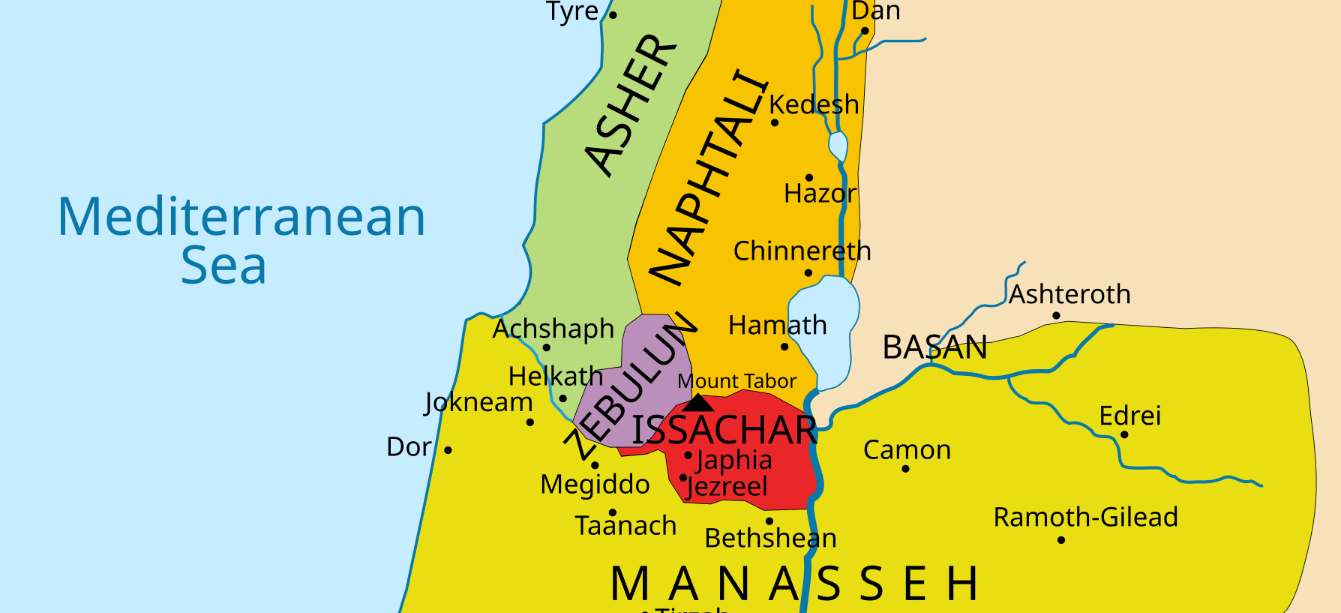
And see also Wikipedia, “12 Tribes of Israel Map”, screenshot of the relevant (northern) part:

I.e. parasitic worms in the digestive system.