

This sugya explains the origins and enduring observance of the wood offering—specific days when families brought wood to the Temple for the altar fire.1 The Mishnah lists these appointed times, and the accompanying baraita asks why such dates needed to be recorded. It recounts that when the exiles returned to Jerusalem at the start of the Second Temple period, no wood was available in the Temple storehouse. Certain families volunteered their own supplies. The prophets of that time decreed that even if the chamber were later filled with wood, the descendants of these families would continue to bring their offerings annually on fixed days, a practice grounded in Nehemiah 10:35, which formalized the lot system for the wood offering of priests, Levites, and the people.
The sugya then quotes a baraita that preserves stories of their pious ancestors who defied foreign decrees (religious persecution) forbidding the transport of wood and first fruits (bikkurim) to Jerusalem.
During one such persecution under the “evil kingdom” (Seleucid Greeks or Rome), guards were stationed on the roads to block pilgrims. Devout Jews disguised their offerings: some hid baskets of first fruits under dried figs and carried pestles on their shoulders, pretending to go pound figs; others, the descendants of Salmai the Netophathite, disguised wood donations as ladders, claiming to be fetching doves from a dovecote. After passing the guards, they uncovered their true cargo and brought their gifts to Jerusalem.
The baraita concludes by invoking Proverbs 10:7—“The memory of the righteous shall be for a blessing”—in praise of these loyal families, contrasting them with the obstructers of proper worship such as Jeroboam, whose “name shall rot.”
Outline
Intro - Clans Who Brought Wood to the Second Temple in Secret: Stories of Subterfuge Under Foreign Religious Persecution (Taanit 28a)
The Passage
Baraita - Why list “times for the wood offering”? Families who first donated wood in the early Second Temple period kept fixed dates even if the chamber was full
Prooftext - Nehemiah 10:35
The “Pestle Thieves” and “Fig Packers”: “pestle/dried-fig” ruse for bikkurim; “ladders” ruse for wood
A foreign royal decree forbade the bringing of wood for the altar and first fruits to Jerusalem
Pious Jews disguised their offerings: They filled baskets with first fruits, covered them with dried figs, and carried pestles on their shoulders
When questioned by guards on the roads, they claimed to be going to pound figs; Once past the guards, they revealed the contents and brought the offerings to Jerusalem
The Descendants of Salmai of Netophat
A similar story is told of the descendants of Salmai the Netophathite, under a similar decree as previous
Devout Jews carried pieces of wood disguised as ladders
When stopped, they said they were going to collect doves from a dovecote, using the ladders on their shoulders; After passing the guards, they dismantled the ladders and brought the wood to Jerusalem
Moral Evaluation - The memory of the righteous shall be for a blessing,” referring to these loyal families, while “the name of the wicked shall rot” applies to Jeroboam and others who obstructed proper worship - Proverbs 10:7
The Passage
Baraita - Why list “times for the wood offering”? Families who first donated wood in the early Second Temple period kept fixed dates even if the chamber was full
זמן עצי כהנים והעם כו׳.
תנו רבנן:
למה הוצרכו לומר זמן עצי כהנים והעם?
אמרו:
כשעלו בני הגולה
לא מצאו עצים בלשכה --
ועמדו אלו והתנדבו משלהם.
וכך התנו נביאים שביניהן:
שאפילו לשכה מלאה עצים --
יהיו אלו מתנדבין משלהן,
The Mishnah continues with a list of the times for the wood offering of priests and the people.
A baraita states:
Why was it necessary to state the times for the wood offering of priests and the people?
They said in response that this is what happened:
When the people of the exile ascended to Jerusalem in the beginning of the Second Temple period --
they did not find enough wood in the Temple chamber for the needs of the altar.
And these families arose and donated from their own wood to the Temple.
And the prophets among them stipulated as follows,
that even if the entire chamber were full of wood --
the descendants of these families would donate wood from their own property on these specific days,
Prooftext - Nehemiah 10:35
שנאמר:
״והגורלות הפלנו
על קרבן העצים
הכהנים הלוים והעם
להביא לבית אלהינו
לבית אבותינו
לעתים מזמנים שנה בשנה
לבער על מזבח ה׳ אלהינו
ככתוב בתורה״.
as it is stated:
“And we cast lots,
the priests, the Levites and the people,
for the wood offering,
to bring it into the house of our God,
according to our fathers’ houses,
at appointed times year by year,
to burn upon the altar of YHWH our God,
as it is written in the Torah” (Nehemiah 10:35).
Although these donations were not always necessary, it was established that all generations would observe these days.
The “Pestle Thieves” and “Fig Packers”: “pestle/dried-fig” ruse for bikkurim; “ladders” ruse for wood
A baraita asks who were the descendants of “those who deceived with a pestle” (גונבי עלי) and “those who packed dried figs” (קוצעי קציעות).
ועמהם כהנים ולוים וכל מי כו׳.
תנו רבנן:
מה היו
בני גונבי עלי
ובני קוצעי קציעות?
The Mishnah further taught that on the 15th of Av, wood was brought by the descendants of Zattu ben Yehuda, and with this group were other priests and Levites, and anyone who erred with regard to his tribe, i.e., Israelites who did not know which tribe they were from, and the descendants of those who deceived the authorities with a pestle, and the descendants of those who packed dried figs.
A baraita states:
Who were
the descendants of “those who deceived the authorities with a pestle” (גונבי עלי)
and the descendants of “those who packed dried figs” (קוצעי קציעות)
A foreign royal decree forbade the bringing of wood for the altar and first fruits to Jerusalem
אמרו:
פעם אחת גזרה מלכות הרשעה שמד על ישראל
שלא יביאו עצים למערכה,
ושלא יביאו בכורים לירושלים,
והושיבו פרוזדאות על הדרכים
כדרך שהושיב ירבעם בן נבט,
שלא יעלו ישראל לרגל.
They said in explanation:
Once, the evil kingdom2 of Greece issued a decree of apostasy3 against the Jews,
that they may not bring wood for the arrangement (מערכה) of the altar
and that they may not bring first fruits to Jerusalem.
And they placed guards4 on the roads,
in the manner that Jeroboam, son of Nevat, placed guards,
so that the Jews could not ascend for the pilgrim Festival.5
Pious Jews disguised their offerings: They filled baskets with first fruits, covered them with dried figs, and carried pestles on their shoulders
מה עשו כשרין ויראי חטא שבאותו הדור?
הביאו סלי בכורים
וחיפום בקציעות
ונטלום, ועלי על כתפיהן.
What did the worthy (כשרין) and sin-fearing individuals of that generation do?
They brought baskets of first fruits,
and covered them (חיפום) with dried figs (קציעות),
and took them with a pestle6 on their shoulders.
When questioned by guards on the roads, they claimed to be going to pound figs; Once past the guards, they revealed the contents and brought the offerings to Jerusalem
וכיון שהגיעו אצל פרוזדאות,
אמרו להם: להיכן אתם הולכין?
אומרין להם:
לעשות שני עגולי דבילה במכתשת שלפנינו,
ובעלי שעל כתפינו.
כיון שעברו מהן —
עיטרום בסלים,
והביאום לירושלים.
And when they reached the guards,
the guards said to them: Where are you going?
They said to them:
We are going to prepare two round cakes of pressed figs (עגולי דבילה) with the mortar (מכתשת) that is down the road before us
and with the pestle that we are carrying on our shoulders.
As soon as they passed the guards --
they decorated (עיטרום) the baskets of first fruits
and brought them to Jerusalem.
The Descendants of Salmai of Netophat
A similar story is told of the descendants of Salmai the Netophathite, under a similar decree as previous
תנא:
הן הן בני סלמאי הנתופתי.
תנו רבנן:
מה הן בני סלמאי הנתופתי?
אמרו:
פעם אחת גזרה מלכות הרשעה שמד על ישראל --
שלא יביאו עצים למערכה,
והושיבו פרוזדאות על הדרכים
כדרך שהושיב ירבעם בן נבט על הדרכים,
שלא יעלו ישראל לרגל.
A baraita taught:
This was something that was performed in a similar manner by the descendants of Salmai of Netophat.
The Talmud explains this comment by quoting a baraita.
A baraita states:
Who are the descendants of Salmai of Netophat?
They said in explanation:
Once, the evil kingdom of Greece issued a decree of apostasy against the Jews --
that they may not bring wood for the arrangement of the altar.
And they placed guards on the roads,
in the manner that Jeroboam, son of Nevat, placed guards,
so that the Jews could not ascend for the pilgrim Festival.
Devout Jews carried pieces of wood disguised as ladders
מה עשו יראי חטא שבאותו הדור?
הביאו גזיריהן
ועשו סולמות,
והניחו על כתפיהם
והלכו להם.
What did the sin-fearing individuals of that generation do?
They brought their pieces of wood
and prepared ladders,7
and they placed the ladders on their shoulders
and went off to Jerusalem.
When stopped, they said they were going to collect doves from a dovecote, using the ladders on their shoulders; After passing the guards, they dismantled the ladders and brought the wood to Jerusalem
כיון שהגיעו אצלן,
אמרו להם: להיכן אתם הולכין?
אמרו להם:
להביא גוזלות משובך שלפנינו
ובסולמות שעל כתפינו.
כיון שעברו מהן --
פירקום
והביאום והעלום לירושלים.
When they reached the guards,
the guards said to them: Where are you going?
They said to them:
We are going to bring down doves (גוזלות) from the dovecote (שובך) that is located down the road before us
and with these ladders that are on our shoulders.
As soon as they had passed the guards --
they dismantled (פירקום) the ladders
and took them up to Jerusalem.
Moral Evaluation - The memory of the righteous shall be for a blessing,” referring to these loyal families, while “the name of the wicked shall rot” applies to Jeroboam who obstructed proper worship - Proverbs 10:7
(See footnote.)8
ועליהם ועל כיוצא בהם הוא אומר:
״זכר צדיק לברכה״,
ועל ירבעם בן נבט וחבריו נאמר:
״ושם רשעים ירקב״.
And about these families who provided these donations and others like them, the verse says:
“The memory of the righteous shall be for a blessing” (Proverbs 10:7), as they are remembered for the good throughout the generations.
And about Jeroboam, son of Nevat, and his ilk,9 it is stated:
“But the name of the wicked shall rot” (Proverbs 10:7).
Riffing off the Mishnah discussed in my “The Eight Second Temple Clans in the Schedule of the Wood Offering, Purported Descendants of Families mentioned in Late Biblical Books (Mishnah, Ta’anit 4:5)“.
See my extended discussion there.
On the wood offering, see ibid., section “The Wood Offering (korban etzim - קרבן עצים)“.
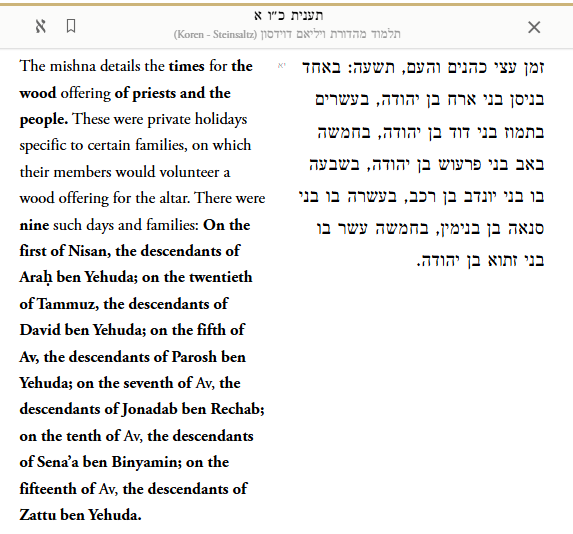
As an aside, note the improved formatting here in ChavrutAI, vs Sefaria, highlighting the Mishnah’s literary structure; screenshots:
https://chavrutai.com/tractate/taanit/26a#section-11 (with labeling on):

https://www.sefaria.org.il/Taanit.26a.11:
מלכות הרשעה.
Ed. Steinsaltz interprets that this is referring to “the Greeks”, i.e. the Seleucids, at the time of Antiochus.
Note that “evil kingdom” in the Talmud typically refers to the Roman empire, and not to the Greeks (=Seleucids).
שמד.
On this word, see Jastrow (modernized):
[attempt at destruction,] religious persecution.
Tosefta Avodah Zarah 5 (Tosefta Avodah Zarah 6:6 -בי מוסייאות … שעת השמד אע”פ שעבר השמד וכ׳ - “altars which non-Jews have put up at a time of religious persecution are forbidden (as to the use of the materials) even after the persecution is over”;
Yerushalmi ibid. 5, 45a top;
Bavli Avodah Zarah 54a Manuscript Munich: (ed. בשעת הגזירה).
Tosefta Shabbat 15 (Tosefta Shabbat 16:17 במה דברים אמורים שלא בשעת השמד אבל בשעת הש׳ וכ׳ - “this (that one may violate religious laws to save his life) is said only when there is no general religious persecution, but during a persecution one must give up his life even for the least essential law”;
Sanhedrin 74a Manuscript Munich: (ed. גזירת המלכות).
Shir HaShirim Rabbah 2:5 - שלפי השמד, see שֶׁלֶף;
Shabbat 60a Manuscript Munich: (ed. הגזרה);
and frequently.
Bereishit Rabbah 67:7 (referring to Genesis 27:40) - אם ראית … גזור עליו שמדין וכ׳ - ”when you (Esau-Rome) see your brother (Jacob) cast off the yoke of the Law, decree persecutions over him, and you shall have power over him.”
Midrash Tehillim 18:9 - שכמה שמדים גזרו עלינו בימיה - “for they decreed many persecutions over us in her (Rome’s) days”;
and elsewhere.
Chullin 101b:6 - שמדא הוא דהוה וכ׳ - Manuscript Munich: “it was a time of persecution (when Jews were forbidden to observe their festive days), and they sent word from there (Eretz Yisrael) that this year’s Day of Atonement should be observed on a Sabbath day”.
Bereishit Rabbah 79 - הוו טמירין … ביומא דשמדא - “were hidden in a cave for thirteen years during the (Hadrianic) persecution”;
Jerusalem Talmud Chagigah 2:1:9 - בשעת שׁוּמְדָּא;
and elsewhere.
This word (shemad) was often censored in the printed editions by the Christian censor, and replaced by the word gezeira.
פרוזדאות - prozda’ot, from Latin praesidia - “guards“
See Jastrow (modernized):
(an adaptation of praesidia)
posts, guards.
Taanit 28a:10 - הושיבו פרוזדאות על הדרכים וכ׳ (Manuscript Munich: פרדסייות, פרדסייא; Manuscript Munich: 2 פַּרְסַדְיָאוֹת, פַּרְסִידָאוֹת, see Rabbinowicz, ‘Dikdukei Sofrim’ there, notes 7, 9) - “they placed guards on the roads as Joroboam had done to prevent pilgrims etc.”;
Tosefta ibid. 4(3):7 - פרדסיאות, פרדסאות (Variant פרסדיאות); Yerushalmi ibid. 4, 68b bottom of page פרסדאות;
Yalkut Shimoni on Nach 946:3 - פרדסיא׳.
Taanit 30b:13 - יום שביטל … פרוסדיות (Manuscript Munich: פרדסייאות) - “on the day that Hosea … removed the guards which Joroboam etc.”;
Bava Batra 121b - פרדסאות (Manuscript Rome: פרדסיאות, פרדסיות);
The idea that Jeroboam place guards to prevent pilgrimage is based on I Kings 12:26–33, where Jeroboam reasons that continued pilgrimage to Jerusalem will cause Israel to return to Rehoboam; he therefore sets up golden calves in Bethel and Dan and tells the people: “It is too much for you to go up to Jerusalem.”
See the summary at Wikipedia, “1 Kings 12“, section “State worship in Bethel and Dan (12:25–33)“.
The verses don’t mention any guards preventing people from making pilgrimage; Jeroboam simply set up alternative sites of worship and discouraged people from making pilgrimage to Jerusalem. The idea of guards physically blocking the roads appears in rabbinic literature; see also the other sources cited by Jastrow, quoted in previous footnote.
עלי.
Hence the epithet “those who deceived with a pestle” (גונבי עלי).
This word is somewhat is somewhat rare; it’s used also in Mishnah Beitzah 1:5 (=Beitzah.11a.8):
בית שמאי אומרים:
אין נוטלים את העלי לקצב עליו בשר,
ובית הלל
מתירין.
Beit Shammai say:
One may not take a large pestle (עלי) from a mortar, which is normally used for crushing wheat in the preparation of porridge, for any other purpose on a Festival, e.g., to cut meat on it;
and Beit Hillel
permit it.
And see also Jastrow (modernized):
pestle.
Yerushalmi Peah 1, 17a top - [read:] כותש כעלי במכתש, see כָּתַשׁ.
סולמות - sulamot.
Presumably, this explains the name “Salmai”, which is seen as an epithet, not a given name.
As Steinsaltz notes in the next section “The name Salmai alludes to the Hebrew word for ladder, sulam.”
This verse is similarly applied in the context of Temple donations in the Mishnah, see my “Honorable Innovations and Selfish Secrets: Contributions and Criticisms in Second Temple Service (Mishnah Yoma 3:9-11)“, section “Conclusion: Moral Reflection Using Biblical Verses“.
חבריו - literally: “his friends”.