

This is the second part of a three-part series. Part 1 is here; the outline of the series can be found at Part 1.
Part 2
Abaye - 3 cities east of Jordan despite fewer tribes: Gilead had many murderers
בעבר הירדן תלת,
בארץ ישראל תלת?!
אמר אביי:
בגלעד שכיחי רוצחים
The Talmud questions the distribution of the cities:
Why were there 3 cities designated on the east bank of the Jordan, where 2.5 tribes resided (=Reuben, Gad, and half of Manasseh),
and 3 cities designated in Eretz Yisrael, where more than 9 tribes resided?
Abaye said:
In Gilead, which is located on the east bank of the Jordan, murderers are common.
Therefore, a greater number of cities of refuge per capita were required there
Prooftext - Hos 6:8; R’ Elazar - “Akuba mi-dam” = they lay ambush to kill
דכתיב:
״גלעד קרית פעלי און
עקבה מדם״,
מאי ״עקובה מדם״?
אמר רבי אלעזר: שהיו עוקבין להרוג נפשות.
as it is written:
“Gilead is a city of those who work iniquity;
it is covered [akuba] with blood” (Hosea 6:8).
What is the meaning of: Covered [akuba] with blood?
R’ Elazar says: It means that they would set an ambush [okevin] to kill people.
Abaye - Shechem also had many murderers
ומאי שנא מהאי גיסא ומהאי גיסא
דמרחקי,
ומאי שנא מציעאי
דמקרבי?
The Talmud asks:
And what is different about the cities of refuge closest to the border on this southern side of the country and from the border on that northern side of the country,
that are far, 1/4 of the length of Eretz Yisrael from the border,
and what is different about the city of refuge in the middle of the country,
which is relatively close to any potential murderers?1
אמר אביי:
בשכם נמי שכיחי רוצחים
Abaye said:
Murderers are also common in Shechem
Prooftext - Hos 6:9; R’ Elazar - “Ḥever kohanim” = people banded together to kill, like priests banding to divide teruma
דכתיב:
״וכחכי איש גדודים חבר כהנים,
דרך ירצחו שכמה וגו׳״,
מאי ״חבר כהנים״?
אמר רבי אלעזר:
שהיו מתחברין להרוג נפשות,
ככהנים הללו שמתחברין לחלוק תרומות בבית הגרנות.
as it is written:
“And as troops of robbers wait for a man, so does the band of priests;
they murder in the way toward Shechem, yes, they commit enormity” (Hosea 6:9).
What is the meaning of “the band of priests”?
R’ Elazar says:
It means that the people would band together to kill people,
like those priests who band together to distribute teruma among themselves in the granaries.
Abaye - The 6 cities admit fugitives whether they entered knowingly or unknowingly; the 42 Levite cities protect only if entered knowingly - Num 35:6
ותו ליכא?
והא כתיב: ״ועליהם תתנו ארבעים ושתים עיר״
The Talmud asks: And are there no more cities of refuge beyond these 6?
But isn’t it written: “And the cities that you shall give to the Levites: The 6 cities of refuge you shall give for the murderer to flee there, and beyond them you shall give 42 cities” (Numbers 35:6),
indicating that the status of all the Levite cities is that of cities of refuge?
אמר אביי:
הללו,
קולטות
בין לדעת
בין שלא לדעת.
הללו –
לדעת
קולטות,
שלא לדעת
אינן קולטות.
Abaye said:
With regard to these 6 cities designated specifically for this purpose,
By contrast, with regard to those 42 Levite cities,
only if they entered the cities deliberately,
unintentional murderers are provided refuge by the cities.
but if they entered the cities inadvertently,
they are not provided refuge
Abaye - Caleb received Hebron’s fields/suburbs, but the city itself was a Levite/priestly city of refuge - Josh 21:11–12; Judg 1:20
וחברון עיר מקלט הוא[י]?
והכתיב:
״ויתנו לכלב את חברון
כאשר דבר משה״
The Talmud asks:
And is Hebron a city of refuge?
But isn’t it written:
“And they gave Hebron to Caleb,
as Moses had spoken” (Judges 1:20)?
This indicates that Hebron belonged to Caleb from the tribe of Judah, and it was not a Levite city.
אמר אביי:
פרוודהא,
דכתיב:
״ואת שדה העיר ואת חצריה —
נתנו לכלב בן יפנה״.
Abaye said:
Its suburbs [parvadaha] were given to Caleb; the city itself was a city of priests,
as it is written in the context of the distribution of the Levite cities:
“And they gave them Kiryat Arba…which is Hebron…and the field of the city and its courtyards —
they gave to Caleb, son of Jephunneh” (Joshua 21:11–12).
Kadesh listed among fortified cities- Joshua 19:35–37
וקדש עיר מקלט הואי?
והכתיב:
״וערי מבצר:
הצדים צר
וחמת
רקת
וכנרת וגו׳
וקדש
ואדרעי
ועין חצור״
The Talmud further asks:
And is Kadesh a city of refuge?
But isn’t it written:
“And the fortified cities were:
Ziddim Zer,
and Hammath,
Rakkath,4
and Chinnereth…
and Kedesh
and Edrei
and En Hazor” (Joshua 19:35–37)
Baraita - refuge towns must be mid-sized
ותניא:
ערים הללו --
אין עושין אותן
לא טירין קטנים
ולא כרכים גדולים
אלא עיירות בינוניות
and it is taught in a baraita:
With regard to these cities of refuge --
one does not establish them
in small settlements [tirin]
or in large cities;
rather, one establishes them in intermediate-sized towns
Apparently, Kadesh was a large, fortified city.
Rav Yosef - Two cities named Kedesh; the fortified one is distinct from the city of refuge
אמר רב יוסף:
תרתי קדש הואי
Rav Yosef said:
There were two cities named Kedesh,
and the one listed among the fortified cities in the book of Joshua is not the one that was a city of refuge.
Rav Ashi - Like “Selikum” and its fortress, so Kedesh had a fortress alongside the refuge town
(אמר) רב אשי [אמר]:
כגון
סליקום
ואקרא דסליקום.
Rav Ashi said:
The listing of Kadesh among the fortified cities is not difficult, as it is similar to the two adjacent yet separate cities of
Selikum
and the fortification [akra] of Selikum.5
Likewise, there was the fortified city of Kadesh, mentioned in Joshua, and the city itself, which was an intermediate city that served as city of refuge.
Baraita - Cities of refuge must be mid-sized, with water, markets, and population; bolster population if needed
גופא:
ערים הללו —
אין עושין אותן
לא טירין קטנים
ולא כרכין גדולים,
אלא עיירות בינוניות.
ואין מושיבין אותן אלא במקום מים,
ואם אין שם מים –
מביאין להם מים.
ואין מושיבין אותן אלא במקום שווקים,
ואין מושיבין אותן אלא במקום אוכלוסין.
נתמעטו אוכלוסיהן –
מוסיפין עליהן.
נתמעטו דיוריהן –
מביאין להם
כהנים
לוים
וישראלים.
ואין מוכרין בהן
לא כלי זיין,
ולא כלי מצודה,
דברי רבי נחמיה.
וחכמים מתירין.
ושוין ש
אין פורסין בתוכן מצודות,
ואין מפשילין לתוכן חבלים,
כדי שלא תהא רגל גואל הדם מצויה שם.
§ The Talmud discusses the matter itself, and it cites the complete baraita:
With regard to these cities of refuge —
one does not establish them
in small settlements
or in large cities;
rather, one establishes them in intermediate-sized towns.
And one establishes them only in a place where water is available,
and if there is no water available there, as there is no spring accessible from the city —
one brings them water by digging a canal.
And one establishes them only in a place where there are markets,
and one establishes them only in a populated6 place, where there are many people who regularly frequent the town.
If the population of the surrounding areas diminishes —
one adds to it.
If the number of residents7 in the city of refuge itself diminishes —
one brings new residents to the city:
priests,
Levites,
and Israelites.
And one may not sell
weapons
or hunting tools in the cities of refuge, to prevent the blood redeemer from gaining access to means that he could exploit to kill the unintentional murderer who fled to the city of refuge;
this is the statement of R’ Neḥemya.
And the Rabbis permit selling weapons and hunting tools.
And R’ Neḥemya and the Rabbis agree that
one may not spread nets in the cities of refuge,
nor may they braid [mafshilin] ropes in those cities,
so that the foot of the blood redeemer will not be found there.
If the blood redeemer were to enter the city of refuge to purchase nets or ropes, he is apt to encounter the murderer and kill him.
R’ Yitzḥak - prooftext - do what it takes so the manslayer can actually live there - Deut 4:42
אמר רבי יצחק:
מאי קרא?
״ונס אל אחת מן הערים האל וחי״ –
עביד ליה מידי דתהוי ליה חיותא.
R’ Yitzḥak says:
What is the verse from which these matters are derived?
It is written: “And he shall flee to one of these cities and live” (Deuteronomy 4:42),
meaning: Perform some actions for the unintentional murderer so that life in the city of refuge will be conducive to living for him.
All these steps are taken to facilitate that objective.
Baraita - If a student is exiled, his teacher is exiled with him (to sustain Torah study)
תנא:
תלמיד שגלה –
מגלין רבו עמו
The rabbis taught:
In the case of a student who was exiled --
his teacher is exiled to the city of refuge with him, so that the student can continue studying Torah with him there
Prooftext - Deut 4:42
שנאמר: ״וחי״ –
עביד ליה מידי דתהוי ליה חיותא.
as it is stated: “And he shall flee to one of these cities and live,”
from which it is derived: Perform some actions for the unintentional murderer so that life in the city will be conducive to living for him.
Since Torah study is an integral component of his life, arrangements must be made to ensure continuity in that facet of his existence.
R’ Zeira - Do not teach an unfit student (so as not to risk being forced into exile, if the student commits manslaughter)
אמר רבי זעירא:
מכאן ש
לא ישנה אדם לתלמיד שאינו הגון.
R’ Zeira says:
From here one learns that
a person should not teach a student who is not fit,
as that may result in the teacher following the student into exile.
R’ Yoḥanan - If a teacher is exiled, his academy relocates with him
אמר רבי יוחנן:
הרב שגלה –
מגלין ישיבתו עמו
R’ Yoḥanan says:
In the case of a teacher of Torah who was exiled —
his school8 is exiled with him.
R’ Yoḥanan - Torah “provides refuge” - Deut 4:43–44
איני?
והא אמר רבי יוחנן:
מנין לדברי תורה שהן קולטין?
שנאמר:
״את בצר במדבר וגו׳״,
[וכתיב בתריה:]
״וזאת התורה״.
The Talmud asks: Is that so that a teacher of Torah is exiled?
But doesn’t R’ Yoḥanan himself say:
From where is it derived that matters of Torah provide refuge, i.e., that the blood redeemer may not harm one who is engaged in Torah?
It is derived from a verse,
as it is stated:
“Bezer in the wilderness, in the flatlands, for the Reubenites; and Ramoth in Gilead, for the Gadites; and Golan in Bashan, for the Manassites” (Deuteronomy 4:43), in the list of cities of refuge designated by Moses,
and it is written thereafter:
“And this is the Torah” (Deuteronomy 4:44).
Based on that juxtaposition it is derived that the status of Torah is like that of a city of refuge.
Interpretation of R’ Yohanan’s statement: protection only while actively studying
לא קשיא,
הא –
בעידנא דעסיק בה,
הא –
בעידנא דלא עסיק בה.
The Talmud answers: This is not difficult, as
this statement of R’ Yoḥanan, that the status of Torah is like that of a city of refuge,
is referring to Torah at the time that one is engaged (עסיק) in its study,
and that statement of R’ Yoḥanan, that the teacher of Torah must take his school to the city of refuge,
is referring to the teacher of Torah at the time that he is not engaged in its study.
His mere presence in a city of refuge provides him with continuous protection.
Alternative interpretation of R’ Yohanan’s statement: Torah study protects from the Angel of Death
ואי בעית אימא,
מאי קולטין?
ממלאך המות
And if you wish, say:
What is the meaning of R’ Yoḥanan’s statement that matters of Torah provide refuge?
It means protection, but not for an unintentional murderer from the blood redeemer; rather, it means protection from the Angel of Death.
Anecdote of Rav Ḥisda and the Angel of Death
כי הא דרב חסדא
הוה יתיב וגריס בבי רב,
ולא הוה קא יכיל שליחא [דמלאכא דמותא] למיקרב לגביה,
דלא הוה שתיק פומיה מגירסא,
סליק ויתיב אארזא דבי רב,
פקע ארזא
ושתיק,
ויכיל ליה
This is as it was in this incident where Rav Ḥisda
was sitting and studying in the study hall of Rav
and the agent of the Angel of Death was unable to approach him and take his life
because his mouth was not silent from his study for even a moment.
The agent ascended and sat on the cedar tree of the study hall of Rav.
The cedar tree broke
and Rav Ḥisda was momentarily silent, startled by the sudden noise,
and the agent of the Angel of Death overcame him.
Apparently, matters of Torah provide protection from the Angel of Death only when one is actively engaged in their study.
R’ Tanḥum bar Ḥanilai - Reuben is listed first in “rescue” because he began rescuing Joseph - Gen 37:21; Deut 4:43
אמר רבי תנחום בר חנילאי:
מפני מה זכה ראובן לימנות בהצלה תחלה?
§ R’ Tanḥum bar Ḥanilai says:
For what reason was Reuben privileged to be enumerated first in the rescue?
as the first city of refuge listed is Bezer (see Deuteronomy 4:43), which is located in the tribal portion of Reuben
מפני שהוא פתח בהצלה תחלה,
שנאמר:
״וישמע ראובן
ויצלהו מידם״.
It is due to the fact that he began the rescue of Joseph first,
as it is stated:
“And Reuben heard
and delivered him from their hands” (Genesis 37:21).
Steinsaltz explains:
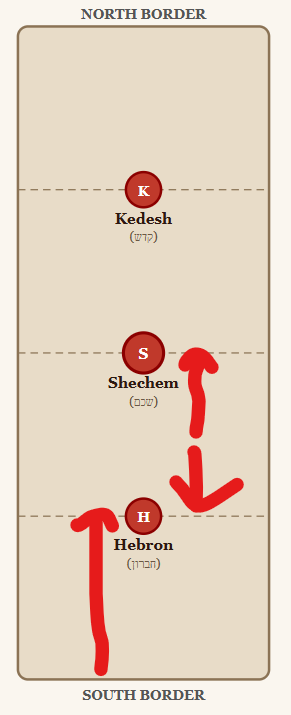
The maximum distance that one would need to travel to reach the middle city (=Shechem) is 1/2 the distance from the northern and southern borders to their respective cities of refuge (=Kedesh and Hebron).
Schema:
קולטות - literally: “absorb”.
That is, they formally grant refuge: once the manslayer enters, the go’el ha-dam is forbidden to kill him; if the go’el ha-dam kills him, it’s legally considered murder.
לדעת - literally: “with knowledge”.
On this place, see the Talmud’s discussion elsewhere, in my “Pt1 Mapping Roman-Era Eretz Yisrael: From Biblical Place-Names to the Powers of Edom (Megillah 6a-b)“.
Note the Greek loanword akra (“fortress”), and the place-name pairing “Selikum ve-akra de-Selikum,” referring to Seleucia and its fort.
See Wikipedia, “Seleucia“:
Seleucia […] was a major Mesopotamian city, located on the west bank of the Tigris River within the present-day Baghdad Governorate in Iraq.
It was founded around 305 BCE by Seleucus I Nicator as the first capital of the Seleucid Empire, and remained an important center of trade and Hellenistic culture after the imperial capital relocated to Antioch.
The city continued to flourish under Parthian rule beginning in 141 BCE; ancient texts claim that it reached a population of 600,000. Seleucia was destroyed in 165 CE by Roman general Avidius Cassius and gradually faded into obscurity in the subsequent centuries.
The site was rediscovered in the 1920s by archaeologists.
And see ibid., section “Sasanian rule“:
Over sixty years later a new city, Veh-Ardashir, was built across the river by Persian emperor Ardashir I.
This new city was long believed to be located at Seleucia but was shown by Italian excavations to be a fresh construction separate from Seleucia and Ctesiphon.
There were active Christian churches in Mesopotamia from the 1st century onwards and in the 3rd or 4th century Seleucia became an important centre.
On Ardashir in the Talmud, see Jastrow (modernized):
אַרְדְּשִׁיר
Ardshir, formerly Seleucia, near Ctesiphon.
Gittin 6a:14 - בי ארדשיר.
Eruvin 57b. Bava Batra 52a, see הוֹרְמִיז.
Yevamot 37b:6 - דַּרְדְּשִׁיר = דְאַרְדשיר, substitute for: הוֹרְמִיז;
Yoma 18b דרשיש (correct accordingly).
אוכלוסין - from Greek.
דיוריהן.
The baraita distinguishes between okhlosin and diorin. The difference isn’t fully clear. Steinsaltz interprets that the former is the “population of surrounding areas”, while the latter is “residents in the city of refuge itself”.
ישיבתו - literally: “his yeshiva”.
Really good to read