

This the first part of a two-part series. The outline of the series is below.
This sugya gathers a wide range of teachings centered on the yetzer hara (evil inclination), its nature, its power, its ultimate fate, and its role in both individual moral struggle and national history. It opens with R’ Yehuda’s teaching about the (messianic) end of days, when God brings the evil inclination before both the righteous and the wicked and “slaughters” it.1 To the righteous it appears as a high mountain; to the wicked, as a hair’s breadth. Both groups weep: one asking how they could ever have conquered something so great, the other how they failed to conquer something so small. God Himself “wonders with them,” as supported by Zechariah 8:6.
The discussion shifts to the process and growth of temptation. Rav Asi teaches that the evil inclination begins as thin as a spider’s thread and ultimately becomes like the thick ropes of a wagon, supported by Isaiah 5:18. A baraita then introduces the future dialogue between God and Messiah,2 whom God invites to “ask” anything (Psalms 2:7–8). After seeing Messiah ben Yosef killed, he asks only for life, and God answers with Psalms 21:5, describing that request already foretold.
Next, R’ Avira / R’ Yehoshua ben Levi list seven names given to the evil inclination by different biblical figures: “evil” (God, Genesis 8:21); “uncircumcised” (Moses, Deuteronomy 10:16); “impure” (David, Psalms 51:12); “enemy” (Solomon, Proverbs 25:21–22, with a derash on yeshalem/yashlimenu); “stumbling block” (Isaiah 57:14); “stone” (Ezekiel 36:26); “hidden/northern one” (Joel 2:20). A baraita identifies Joel’s “northern one” as the evil inclination because it is “hidden” in the human heart.
Further homiletics on Joel 2:20 interpret its destructive “face toward the eastern sea” as the destruction of the First Temple and its scholars, and “its end toward the western sea” as the same toward the Second Temple. Its “foulness rising” indicates its abandonment of the nations to incite Israel (“Israel’s enemies”).
Abaye adds that the evil inclination provokes Torah scholars most of all. A story follows illustrating this point: Abaye overhears a man and woman planning to travel together; he follows them for three parasangs to prevent sin but finds they act innocently. Concluding that he himself would not have resisted in their place, he suffers distress until “a certain Elder” teaches him the principle: “Anyone greater than his fellow, his evil inclination is greater than his.”
Further statements describe the daily and existential struggle: R’ Yitzḥak cites Genesis 6:5 to teach that a person’s inclination overpowers him each day. R’ Shimon ben Lakish adds that it seeks to kill him (Psalms 37:32), and only divine help prevents defeat (Psalms 37:33). The school of R’ Yishmael teaches that if the “disgusting one” (=the evil inclination) meets you, drag it to the study hall: Torah—likened to water and fire—dissolves stone (Isaiah 55:1; Job 14:19) and shatters iron (Jeremiah 23:29).
R’ Shmuel bar Naḥmani in the name of R’ Yoḥanan says the evil inclination entices a person in this world and testifies against him in the next (Proverbs 29:21, using R’ Ḥiyya’s alphabet code to read “manon” as “witness”). Rav Huna reconciles Hosea 4:12 (“caused them to err”) and 5:4 (“is within them”): at first it misleads from outside, ultimately it becomes internal. Rava uses Nathan’s parable (2 Samuel 12:4) to describe stages: first a “traveler,” then a “guest,” then an “owner.”
Additional teachings address sexual desire, divine regret, and the role of God in shaping human hearts. R’ Yoḥanan states that a man’s “small organ” (=penis) behaves oppositely from ordinary appetite: starving it (of sex) satisfies, feeding it intensifies desire (Hosea 13:6).
Rav Ḥana bar Aḥa in the name of Rav’s school lists four creations God “regrets”: exile, Chaldeans, Ishmaelites, and the evil inclination, each supported by verses (Isaiah 52:5; Isaiah 23:13; Job 12:6; Micah 4:6).
R’ Yoḥanan concludes that without three verses—Micah 4:6; Jeremiah 18:6; Ezekiel 36:26—Israel’s “legs” would collapse under their sins, because these verses show that God participates in the shaping, corrupting, and re-forming of the human heart. Rav Pappa adds a fourth verse (Ezekiel 36:27) describing God placing His spirit within Israel to cause obedience.
Together these teachings form a unified exploration of the nature, power, and destiny of the evil inclination, the human struggle against it, and the interplay of human effort and divine influence from the present world to the end of days.
Outline
Intro
The Passage - The Evil Inclination (‘Yetzer HaRa’) and Human Moral Struggle (Sukkah 52a-b)
R’ Yehuda - In the (messianic) future God will slaughter the evil inclination before the righteous and the wicked; to the righteous it will appear like a high mountain, to the wicked like a hair’s breadth; both will weep in amazement
... and even God will wonder with them - Zechariah 8:6
Rav Asi - The evil inclination begins like a thin spider-thread and ends like the thick ropes of a wagon (i.e. early temptations are barely noticeable but become binding over time)
Prooftext - Isaiah 5:18
Baraita - God invites the Messiah to request anything he wants
Prooftext - Psalms 21:5
After seeing Messiah ben Yosef killed, he asks only for life
God responds that David already prophesied that request - Psalms 2:7–8
R’ Avira / R’ Yehoshua ben Levi - The evil inclination has 7 names (each given by a different biblical figure)
Baraita - “The northern/hidden one” is the evil inclination, called so because it is “hidden” in a person’s heart - Joel 2:20
Baraita - Homiletic interpretation of Joel 2:20
Part 2
Story about Abaye - Abaye follows a man and woman to prevent sin; they part innocently
... Abaye concludes that in their place he would have sinned; “A certain elder” to Abaye - “Anyone who is greater than his fellow, his evil inclination is greater than his” (explaining Abaye’s intense struggle as a function of his stature)
R’ Yitzḥak - A person’s inclination overpowers him every day; “only evil all day” describes the constancy of this impulse - Genesis 6:5
R’ Shimon ben Lakish - The evil inclination overcomes a person daily and seeks to kill him - Psalms 37:32
... only God’s help prevents total defeat - Psalms 37:33
R’ Yishmael’s School - If the “disgusting one” (yetzer) meets you, drag it to the study hall; Torah, compared to water and fire, can dissolve stone or shatter iron - Isaiah 55:1; Job 14:19; Jeremiah 23:29
R’ Shmuel bar Naḥmani citing R’ Yoḥanan - The evil inclination incites a person in this world and later testifies against him in the next
Prooftext - Proverbs 29:21
Rav Huna - “The spirit of harlotry caused them to err” versus “is within them” describes a process: at first external temptation, later internalized nature - Hosea 4:12, 5:4
Rava - The evil inclination is first a “traveler,” then a “guest,” and finally a “man” (permanent inhabitant; reading Nathan’s parable to David as a model of escalating intimacy with sin) - 2 Samuel 12:4
R’ Yoḥanan - A man has a “small organ” (=penis): if he “starves” it (of sex), it is satisfied; if he “feeds” it (overindulges in sex), it is always hungry - Hosea 13:6
Rav Ḥana bar Aḥa citing Rav’s School - God regrets 4 creations: exile, Chaldeans, Ishmaelites (=Arabs), and the evil inclination
Prooftexts (all portrayed as harmful forces) - Isaiah 52:5; Isaiah 23:13; Job 12:6; Micah 4:6
R’ Yoḥanan - Were it not for 3 verses showing God’s role in corrupting and reshaping hearts, “the legs” of Israel would collapse under the weight of their sins
The three verses - Micah 4:6; Jeremiah 18:6; Ezekiel 36:26
Rav Pappa - Adds a 4th verse: God’s spirit placed within Israel causes them to walk in His statutes and perform His laws - Ezekiel 36:27
The Passage
R’ Yehuda - In the (messianic) future God will slaughter the evil inclination before the righteous and the wicked; to the righteous it will appear like a high mountain, to the wicked like a hair’s breadth; both will weep in amazement
[...]
דרש רבי יהודה:
לעתיד לבא,
מביאו הקדוש ברוך הוא ליצר הרע,
[...]
R’ Yehuda taught:
In the future, at the (messianic) end of days,
God will bring the evil inclination
ושוחטו
בפני הצדיקים
ובפני הרשעים.
צדיקים --
נדמה להם כהר גבוה,
ורשעים --
נדמה להם כחוט השערה.
הללו בוכין
והללו בוכין.
צדיקים בוכין ואומרים:
היאך יכולנו לכבוש הר גבוה כזה?!
ורשעים בוכין ואומרים:
היאך לא יכולנו לכבוש את חוט השערה הזה?!
and slaughter it
in the presence of the righteous
and in the presence of the wicked.
For the righteous --
the evil inclination appears to them as a high mountain,
and for the wicked --
it appears to them as a mere strand of hair.
These weep
and those weep.
The righteous weep and say:
How were we able to overcome so high a mountain?!
And the wicked weep and say:
How were we unable to overcome this strand of hair?!
... and even God will wonder with them - Zechariah 8:6
ואף הקדוש ברוך הוא תמה עמהם,
שנאמר:
״כה אמר ה׳ צבאות:
כי יפלא בעיני שארית העם הזה בימים ההם
גם בעיני יפלא״.
And even God will wonder with them,
as it is stated with regard to the eulogy:
“So says YHWH of hosts:
If it be wondrous in the eyes of the remnant of this people in those days,
it should also be wondrous in My eyes” (Zechariah 8:6).
Rav Asi - The evil inclination begins like a thin spider-thread and ends like the thick ropes of a wagon (i.e. early temptations are barely noticeable but become binding over time)
אמר רב אסי:
יצר הרע
בתחילה
דומה לחוט של בוכיא,
ולבסוף
דומה כעבותות העגלה,
Apropos the evil inclination and the battle against it, the Talmud cites that which Rav Asi said:
the evil inclination
Initially, when it begins to entice someone,
it is like a strand of a spider’s web [bukhya];
and ultimately
it is like the thick ropes (עבותות) of a wagon,
Prooftext - Isaiah 5:18
שנאמר:
״הוי מושכי העון בחבלי השוא
וכעבות העגלה חטאה״.
as it is stated:
“Woe unto them that draw iniquity with cords of vanity,
and sin as if it were with a wagon rope” (Isaiah 5:18).
Initially, the enticement is almost imperceptible, like a thin strand; however, after one sins, it is like wagon ropes tied tightly around him.
Baraita - God invites the Messiah to request anything he wants
תנו רבנן:
משיח בן דוד
שעתיד להגלות במהרה בימינו,
אומר לו הקדוש ברוך הוא: שאל ממני דבר ואתן לך,
A baraita states:
To Messiah ben David,
who is destined to be revealed swiftly in our time,
God says: Ask of Me anything and I will give you whatever you wish,
Prooftext - Psalms 2:7–8
שנאמר:
״אספרה אל חוק וגו׳
אני היום ילדתיך.
שאל ממני ואתנה גוים נחלתך״.
as it is stated:
“I will tell of the decree; YHWH said unto me: You are My son,
this day have I begotten you,
ask of Me, and I will give the nations for your inheritance, and the ends of the earth for your possession” (Psalms 2:7–8).
After seeing Messiah ben Yosef killed, he asks only for life
וכיון שראה משיח בן יוסף שנהרג,
אומר לפניו:
רבונו של עולם!
איני מבקש ממך אלא חיים.
Once the Messiah ben David saw Messiah ben Yosef, who was killed,
he says to God:
God!
I ask of you only life; that I will not suffer the same fate.
God responds that David already prophesied that request - Psalms Psalms 21:5
אומר לו:
חיים,
עד שלא אמרת כבר התנבא עליך דוד אביך,
שנאמר:
״חיים שאל ממך
נתתה לו וגו׳״.
God says to him:
Life?
Even before you stated this request, your father, David, already prophesied about you with regard to this matter precisely,
as it is stated:
“He asked life of You,
You gave it to him; even length of days for ever and ever” (Psalms 21:5).
R’ Avira / R’ Yehoshua ben Levi - The evil inclination has 7 names (each given by a different biblical figure)
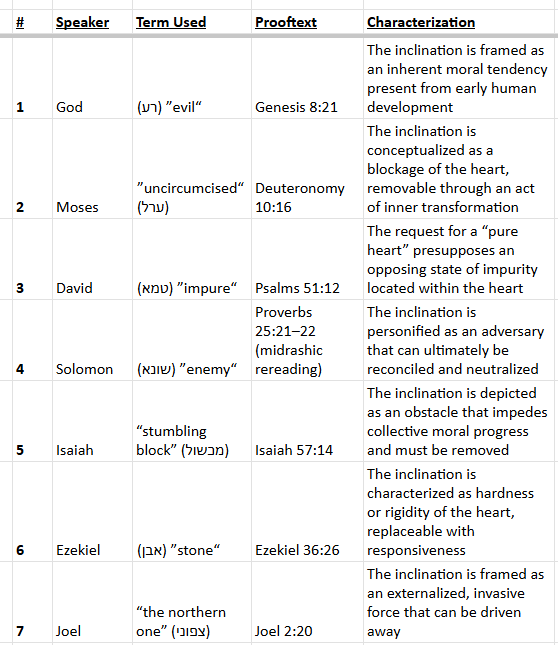
God - “evil” (רע - ‘ra’) in describing the human heart’s inclination from youth - Genesis 8:213
Moses - “uncircumcised” (ערל - ‘arel’), implying the heart needs circumcision - Deuteronomy 10:16
David - “impure,” inferred from his plea for a “pure heart” - Psalms 51:12
Solomon - “enemy”; feeding one’s enemy is read as making God “reconcile it to you,” turning the yetzer from enemy to ally - Proverbs 25:21–22 (with derash on “yeshalem lakh” / “yashlimenu lakh”)
Isaiah - “stumbling block,” to be removed from Israel’s path - Isaiah 57:14
Ezekiel - “stone,” in contrast to the promised “heart of flesh” - Ezekiel 36:26
Joel - “the hidden one” (tzfoni), later identified as the evil inclination - Joel 2:20
דרש רבי עוירא
ואיתימא רבי יהושע בן לוי:
שבעה שמות יש לו ליצר הרע:
§ R’ Avira,
and some say R’ Yehoshua ben Levi, taught:
The evil inclination has seven names:
הקדוש ברוך הוא קראו ״רע״,
שנאמר: ״כי יצר לב האדם רע מנעוריו״.
משה קראו ״ערל״,
שנאמר: ״ומלתם את ערלת לבבכם״.
דוד קראו ״טמא״,
שנאמר: ״לב טהור ברא לי אלהים״,
מכלל דאיכא טמא.
שלמה קראו ״שונא״,
שנאמר: ״אם רעב שנאך האכילהו לחם ואם צמא השקהו מים כי גחלים אתה חותה על ראשו וה׳ ישלם לך״.
אל תקרי ״ישלם לך״, אלא ״ישלימנו לך״.
ישעיה קראו ״מכשול״,
שנאמר: ״סולו סולו פנו דרך הרימו מכשול מדרך עמי״.
יחזקאל קראו ״אבן״,
שנאמר: ״והסרתי את לב האבן מבשרכם ונתתי לכם לב בשר״.
יואל קראו ״צפוני״,
שנאמר: ״ואת הצפוני ארחיק מעליכם״.
God called it “evil”,
as it is stated: “For the inclination of a man’s heart is evil from his youth” (Genesis 8:21).
Moses called it “uncircumcised”,
as it is stated: “And circumcise the foreskin of your hearts” (Deuteronomy 10:16).
David called it “impure”,
as it is stated: “Create for me a pure heart, O God” (Psalms 51:12);
by inference, there is an impure heart that is the evil inclination.
Solomon called it “enemy”,
as it is stated: “If your enemy is hungry, give him bread to eat, and if he is thirsty, give him water to drink; for you will heap coals of fire upon his head, and YHWH will reward you” (Proverbs 25:21–22).
Do not read it as: “And YHWH will reward [yeshalem] you;” rather read it as: “And YHWH will reconcile it [yashlimenu] to you”. God will cause the evil inclination to love you and no longer seek to entice you to sin.
Isaiah called it a “stumbling block”,
as it is stated: “And He will say: Cast you up, cast you up, clear the way, take up the stumbling block out of the way of My people” (Isaiah 57:14).
Ezekiel called it “stone”,
as it is stated: “And I will take away the stony heart out of your flesh, and I will give you a heart of flesh” (Ezekiel 36:26).
Joel called it “hidden one”,
as it says: “But I will remove the northern one [ha-tzefoni] far off from you” (Joel 2:20).
Baraita - “The northern/hidden one” is the evil inclination, called so because it is “hidden” in a person’s heart - Joel 2:20
תנו רבנן:
״ואת הצפוני ארחיק מעליכם״ —
זה יצר הרע,
שצפון ועומד בלבו של אדם.
A baraita states concerning the verse:
“But I will remove the northern one [ha-tzefoni] far off from you,”
that this is referring to the evil inclination.
And why is the evil inclination referred to as tzefoni? It is due to the fact that it is always hidden [tzafun] in the heart of man.
Baraita - Homiletic interpretation of Joel 2:20
״והדחתיו אל ארץ ציה ושממה״ —
למקום שאין בני אדם מצויין להתגרות בהן.
״את פניו אל הים הקדמוני״ —
שנתן עיניו במקדש ראשון והחריבו, והרג תלמידי חכמים שבו.
״וסופו אל הים האחרון״ —
שנתן עיניו במקדש שני והחריבו, והרג תלמידי חכמים שבו.
״ועלה באשו ותעל צחנתו״ —
שמניח אומות העולם, ומתגרה בשונאיהם של ישראל.
״כי הגדיל לעשות״
The baraita continues interpreting the verse in the book of Joel:
“And will drive it to a land barren and desolate” (Joel 2:20),
where there are no people for the evil inclination to incite.
And what damage does the evil inclination cause?: “With its face toward the eastern [ha-kadmoni] sea” (Joel 2:20),
as it set its eyes on the First [mukdam] Temple and destroyed it, and killed the Torah scholars that were in it;
“and its end toward the western [ha’aḥaron] sea” (Joel 2:20),
as it set its eyes on the Second [aḥaron] Temple and destroyed it, and killed the Torah scholars that were in it;
“its foulness may come up, and its ill odor may come up” (Joel 2:20),
as it forsakes the nations of the world and incites the enemies of the Jewish people, a euphemism for the Jewish people. The evil inclination seeks to corrupt the Jews more than it does the members of any other nation.
“Because it has done greatly” (Joel 2:20):
Compare the story—set in the First Temple period—in my “Taming the Fire and The Cost of Desire: The Dramatic Talmudic Story of the Quelling of Human Inclinations for Idolatry and Incest (Yoma 69b = Sanhedrin 64a)”, where I summarize in the intro:
This Talmud sugya narrates a dramatic episode in which the Jewish people, during the time of Nehemiah, prayed for the removal of the inclination for idolatry. Their prayer was answered when a fiery lion cub appeared in the Temple, an incarnation of this inclination. The prophet Zechariah advised trapping it in a lead container to silence its cries.
Following this success, the people also sought to remove the inclination for sex, but faced a dilemma: eliminating it entirely would end procreation, leading to extinction of all life. Instead, they weakened its power to prevent incest without destroying all sexual inclination.
There, the the removal of the inclination for idolatry is described as trapping it in a lead box; subsequently, they contemplate “killing” the inclination for sex.
“Messiah ben David” - “Messiah, son of David”
This is the standard Messiah, “son of David” is specified here to differentiate him from “Messiah, son of Joseph” discussed subsequently.
For this contrast, see also my “Four Craftsmen, Seven Shepherds, and Eight Princes: Talmudic Identifications of Biblical Messianic Figures in Eschatological Prophecies in Zechariah 2 and Micah 5 (Sukkah 52b)“, section “The Biblical “Four Craftsmen” of Redemption in Zechariah 2:3-4: Messiahs, Elijah, and the Righteous High Priest in the End of Days“.
On “son of David” as referring to the Messiah, see my note on the intro to “Pt1 The Messianic Era in the Talmud: The Character of the Messianic Generation and Moral and Social Collapse in the Leadup to the Messianic Era (Sanhedrin 96b-99a)“.
Compare the citation and usage of this verse in my “Four Philosophical Dialogues Between R’ Yehuda Hanasi and the Roman Antoninus (Sanhedrin 91a-b)“, section “From when does the evil inclination dominate a person? (Genesis 4:7)“, where I summarize:
In this dialogue, Antoninos and R’ Yehuda HaNasi discuss when the evil inclination begins to dominate a person. Antoninos queries whether it starts from the formation of the embryo or from birth.
R’ Yehuda HaNasi initially suggests that the evil inclination starts at the embryo’s formation. However, Antoninos counters this by arguing that if this were true, the evil inclination would cause the fetus to harm the mother’s womb and emerge prematurely. Instead, he proposes that the evil inclination begins to dominate a person only upon birth.
R’ Yehuda HaNasi accepts Antoninos’s perspective and finds support for it in a biblical verse from Genesis, which speaks of sin lurking at the entrance. This is interpreted to mean that the evil inclination starts to exert its influence from the moment of birth, symbolized by the newborn emerging from the entrance of the mother’s womb.